✥ Chamber Tale I
A winter tale of faith and making room for what has not yet been seen.
I. The Grove
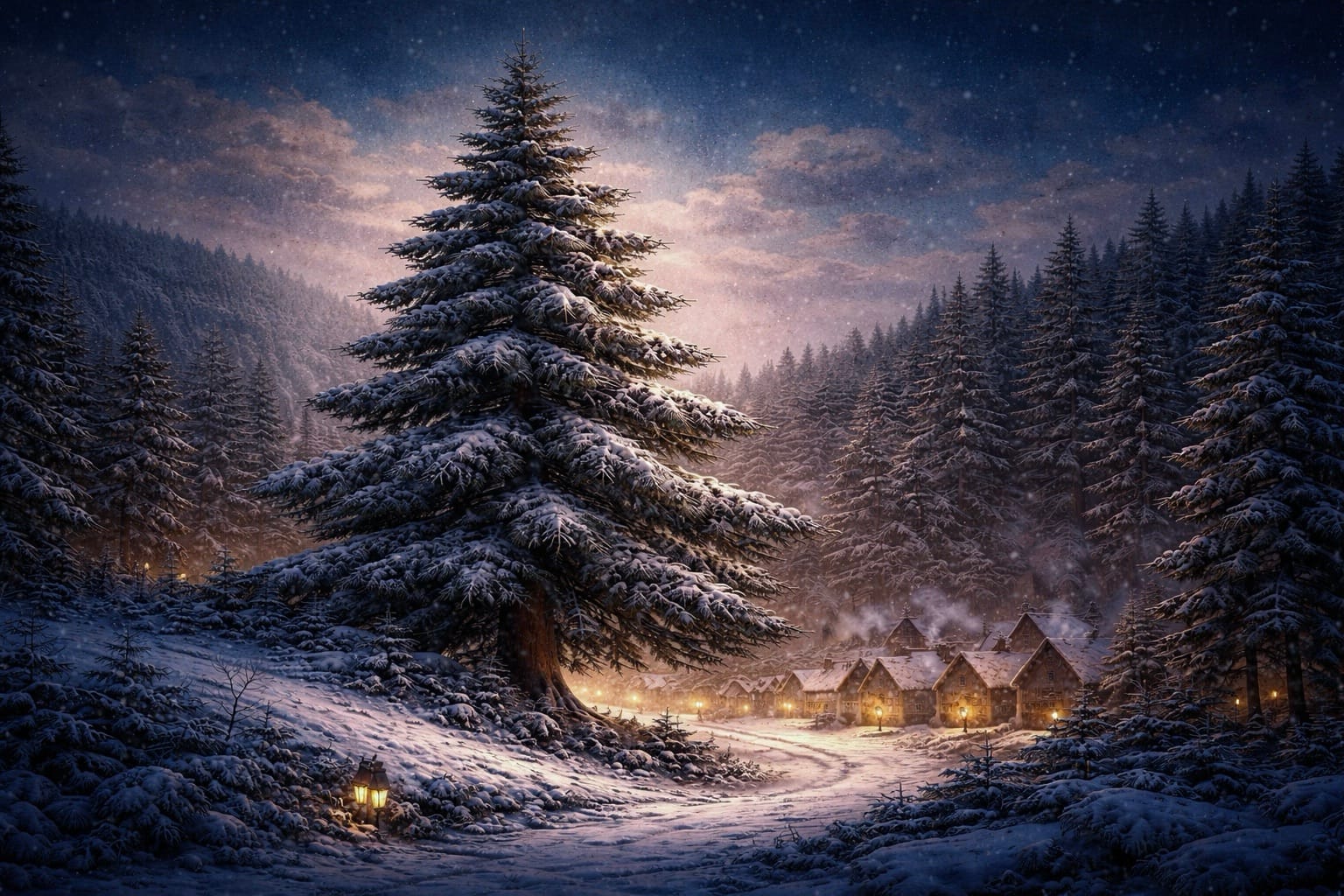
The tree stood at the edge of the village where the ground rose and refused cultivation.
An evergreen, older than memory, its roots gripping stone as if it were holding the hill in place. Too old for someone to remember it being planted. And no one remembered a winter without it. Children were warned not to touch it. Men spoke of it softly, with respect mistaken for reverence.
It was beautiful.
And nothing had ever grown beyond it.
✥
II. The Waiting
He came not as a conqueror, but as a listener.
He stayed through two winters, learning the rhythm of the place—the way frost crept inward towards them all, the way prayers changed when food thinned. He spoke once of a terrace. Of shaping the slope so it could catch the sun and hold its warmth longer than the valley allowed.
They listened politely. Then someone gestured toward the tree.
“There,” they said. “That is as far as the land goes.”
✥
III. The Question
One night, alone, he stood beneath its branches. Snow gathered without sound.
He did not curse the tree. He admired it—its endurance, its refusal to yield to poor conditions. It had sheltered storms. It had outlasted men.
But faith, he believed, was not meant to admire barriers forever.
The tree was not sacred because it was good, he realized, but because no one had ever dared to test it. Over time, its stillness had been mistaken for truth.
✥
IV. The Cut
He chose the morning carefully. He gave no speech. No warning.
Only the sound of steel meeting wood.
The villagers gathered. Some waited for punishment. Others for spectacle. A few for blood. He struck again. And again. Sap bled dark against the snow.
There was no answer of thunder.
No voice of condemnation.
Only the slow surrender of fiber and root.
When the tree finally fell, it did not crash. It settled—like something long prepared to rest.
✥
V. The Silence
They waited.
Nothing happened.
The quiet pressed heavier than fear ever had. Some were disappointed. Others unsettled. A few felt foolish for expecting anything at all. He said nothing. He did not claim victory. He stood where the tree had been and let the absence speak.
Faith, it turned out, weighed more when nothing arrived to confirm it.
✥
VI. What Was Built
The wood of that beautiful was not burned. It was shaped.
Benches first. Then frames. Then a low terrace that opened toward the winter sun. Stones were reset. Soil carried upward. In spring, warmth lingered where frost once ruled. Seeds took and roots spread—new ones, chosen ones.
The hill did not lose its strength.
It learned how to carry new life.
✥
VII. What Was Remembered
Years later, visitors would ask why the place felt different. Why the garden endured. Why light seemed to pause, to hover there now.
No one spoke of miracles.
They spoke instead of a man who trusted what he believed but could not yet see, and who accepted being wrong to some so that life might return to many.
✥
This door closes quietly.