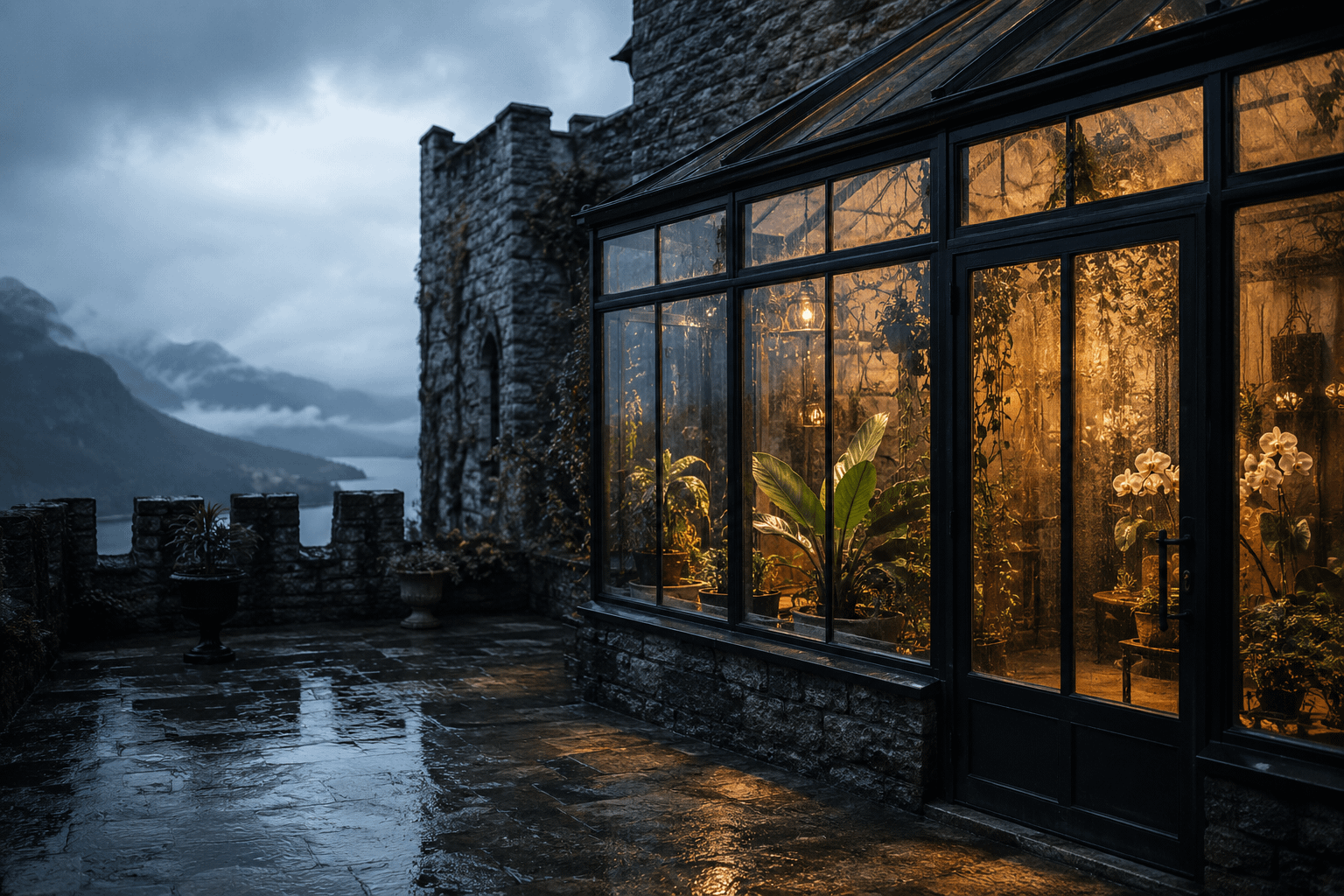
Some parts of the Castle were easier to build than others.
Stone behaves honestly. A poor cut reveals itself quickly. A weak wall settles before long.
It was the unfamiliar work that nearly stopped construction altogether.
I was not prepared for the feeling of it. Because adulthood changes the cost of learning.
I had forgotten what it was to not know how to do something.
When we are young, learning feels almost invisible. You pick something up, fail a few times, adjust, continue. There is very little attached to the process.
That changes.
As adults, we no longer approach new things freely. Every attempt arrives carrying something heavier. Earlier failures. Embarrassment. Time lost before. The quiet pressure that says you should already know what you are doing by now.
Even simple things become charged with consequence.
✧
I have felt this myself these past months while building parts of the Castle that did not come naturally to me. Systems. Technical work that often seemed determined to resist understanding no matter how carefully I approached it.
There were evenings when something failed for reasons I could not see. Hours where progress disappeared into confusion so completely that continuing felt irrational.
That is the moment most adults begin bargaining with themselves.
You tell yourself you are being practical. That your time would be better spent elsewhere. That frustration itself is evidence you should stop.
But I have come to believe something far less comfortable.
Frustration is often the lesson arriving.
Not the obstacle to understanding. The understanding itself.
✧
As a boy, I thought mastery came from talent. I no longer believe that. I think much of it comes from surviving the moment immediately after something refuses to work.
The second attempt.
The second hour.
The second step.
Because the first failure creates friction, but the second encounter forces attention. You stop moving casually. You begin looking at the missing piece more honestly.
And once the gap reveals itself, it rarely hides again.
When it finally gives way, something changes permanently. Not just the task. You. A new capability settles in a way it never could have if it had arrived easily. Something you can reach for later when the next difficult thing appears.
✧
I suspect this is why so many adults stop growing long before they stop living. Not because they are incapable of learning. Because they become unwilling to remain inside frustration long enough for the second step to occur.
The Castle was built almost entirely from second steps.
Stone adjusted after poor cuts. Paths redirected after the ground shifted. Walls rebuilt after measurements failed. Problems revisited after long nights when the easier answer would have been to leave them unfinished.
People often imagine construction as confidence made visible. In truth, much of it is uncertainty endured long enough to become structure.
That may also be true of us.
✧
The Conservatory was never meant to be a place of polished expertise alone. It was meant to be a place where difficult learning could occur honestly. Where frustration is not mistaken for incompetence. Where returning to the work after failure is understood as part of the curriculum itself.
Not the detour from it.
The second step rarely feels dramatic while you are taking it.
Usually it feels inefficient.
Usually it feels late.
Usually it feels like standing once more before something that already embarrassed you.
And still, more often than not, that is the step that changes everything.
✧
This letter is now part of the Conservatory — those who find one often need another.
Hours where progress disappeared into confusion so completely that continuing felt irrational… thank God for 2nd chances n 2nd steps and 2nd impressions!