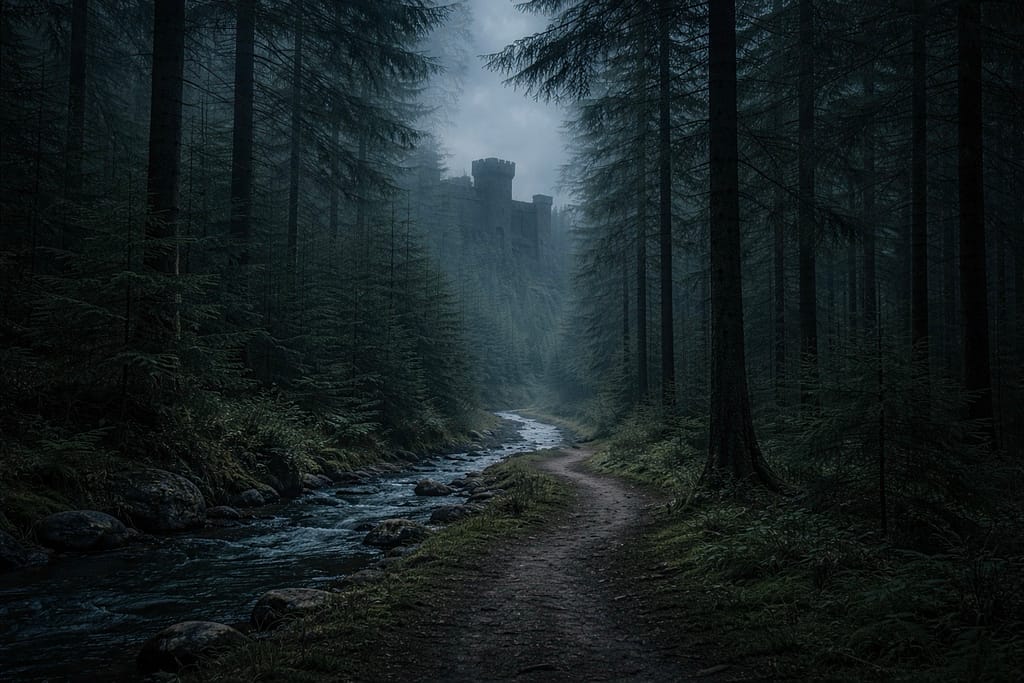
01: the path to High Ground


Volume I: The First Steps


A creek cut through the mountain like a secret the earth never meant to reveal. From ridge to valley, it moved with purpose—twisting, pooling, raging—shaping the land the way time shapes a life: quietly, insistently, without asking permission.

In the valley below, she had walked its edges for as long as she could remember.

Its mountain had been empty for generations.

Now, it carried a new weight.

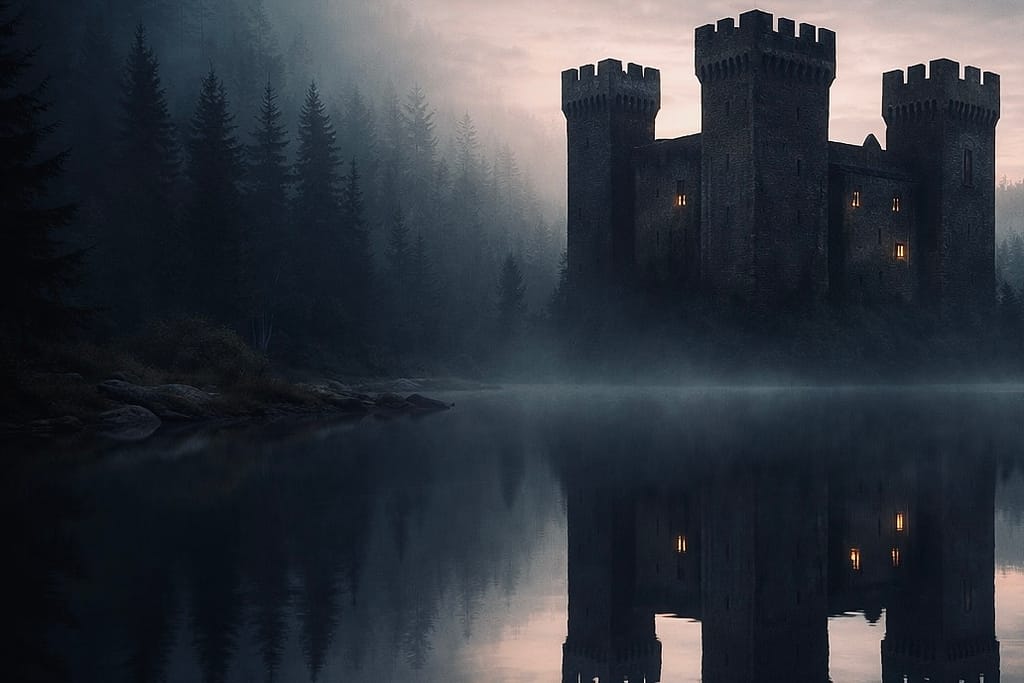
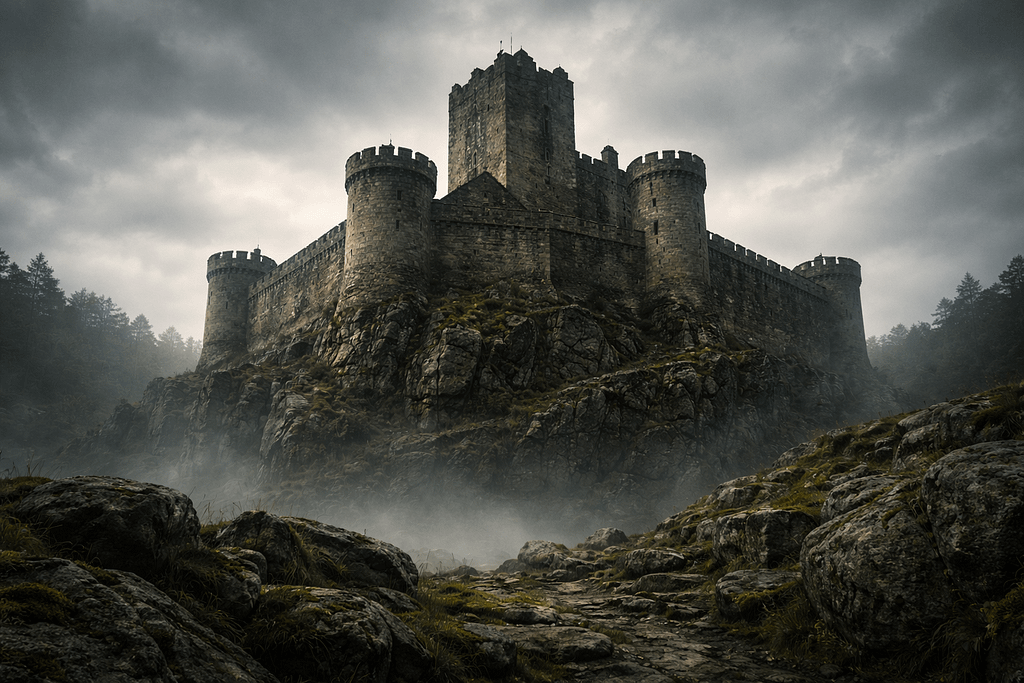
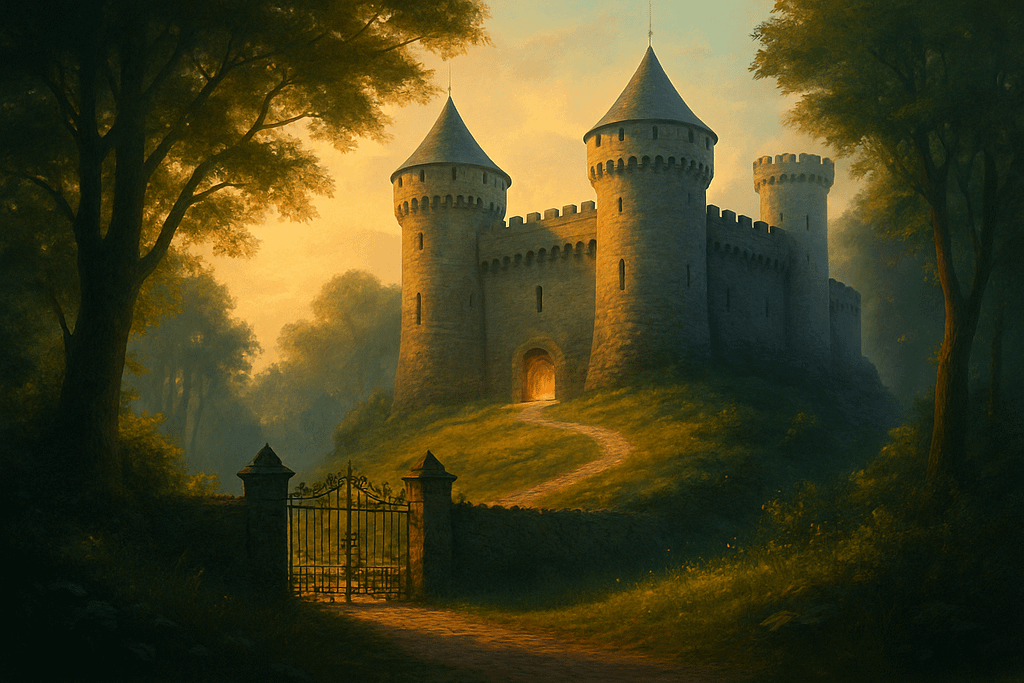
High above the valley, veiled by evergreens, a shadowed structure rose from a plateau—stone, steel, iron ordered with obsessive care. A castle built where no one should have bothered.

It wasn’t visible from the road.

It wasn’t meant to be.

On a distant ridge, a lone bighorn ram stood guard, still as carved marble, its gaze fixed on the narrow path that wound upward through the trees.

Only one road entered this forgotten place. Development plans had died long ago, leaving the valley untouched and strangely suspended. The world had moved on.

The land had not.

Some would call it gloomy.

He always referred to it as charmingly moody.

High Ground


When he first climbed to the plateau, he followed a hunch—a place so remote it swallowed sound and thought alike.

The second climb was to persuade.

The path—if it could be called that—formed beneath the repeated weight of his truck as curiosity hardened into vision. Soon, he spent countless hours hauling stone, timber, and iron to a site only he believed in.

There were easier places to build. Easier ways to live.

But this wasn’t about ease.

It was about intention.

He named it High Ground.

The plateau accepted him.

The Path


Over time, the trail grew more defined—tire marks pressed into earth, brush cleared, the steady pattern of someone who preferred the mountain to the company of people.

From the valley, it had begun to appear where nothing had been before.

His mind rarely quieted.

Along the way, when a clearing held his attention, he carved names into nearby trees:

Yellow Cottage.

Picnic Table.

Sunrise Chair.

And, with a crooked half-smile:

Good for Dead Things.

“I’ll never get to this one either,” he muttered more than once, dragging letters into fresh bark.

High Ground held every unfinished idea, every half-built plan, every restless thought.

It was never meant to be complete.

That may have been why it suited him.

The Woman in the Valley


She had noticed the path long before she admitted it.

The valley had always been her place—the one space that never asked anything of her. Wildflowers gathered easily around her. The breeze carried quiet instead of interruption.

Here, she could think.

And still, she could not ignore the path.

What had once been faint had become deliberate, its curve up the mountainside too purposeful to dismiss. She told herself it was nothing—a deer trail, erosion, anything but intention.

But each visit, the denial wore thinner.

Someone had made that road. And someone continued to use it.

Someone was up there.

She refused to call it curiosity. The word felt too certain.

But something in her tightened each time she looked toward the trees.

A question she did not remember asking.

Her First Step


Then, one afternoon, it happened.

A flash of something dark, angled, impossible to mistake for nature.

A structure. But more than that—a presence.

Her breath caught.

For days she tried to forget it. She had built her life carefully and it asked nothing of her. There was no need.

But the mountain remained. The unseen shape on the plateau held its place.

And the path—always the path—waited.

Until the evening she realized she had already reached its base.

The walk had happened without her noticing.

Behind her lay the familiar way home.

Ahead, the mountain rose into mist, veiling its secrets.

She hesitated.

The last warmth of the sun settled across her shoulders. Every instinct told her to turn back.

Quietly—without ceremony, without excuse—she took her first step.

And the mountain did not let go.


quietly built


There is a kind of man the world rarely celebrates.

He does not chase headlines or gamble his future for applause. He works. He provides. He shows up.

If you ask him, he may mention a job he could have taken. A move he almost made. A risk he once considered. He’ll say it lightly, as if it were only a passing thought.

Sometimes there is something behind it. Not bitterness. Not quite regret. Just the awareness that another road once existed — and that he did not take it.

Safety chosen from fear shrinks a man. Safety chosen from responsibility strengthens him. His reasons were not foolish.

He chose steadiness over spectacle. Presence over performance.

He stayed where others depended on him rather than go impress people who didn’t.

There was no extravagance in his life, but there was reliability. His bills were paid. His word carried weight. His children felt secure. His partner knew he would not disappear when things grew difficult.

He built something quiet and strong.

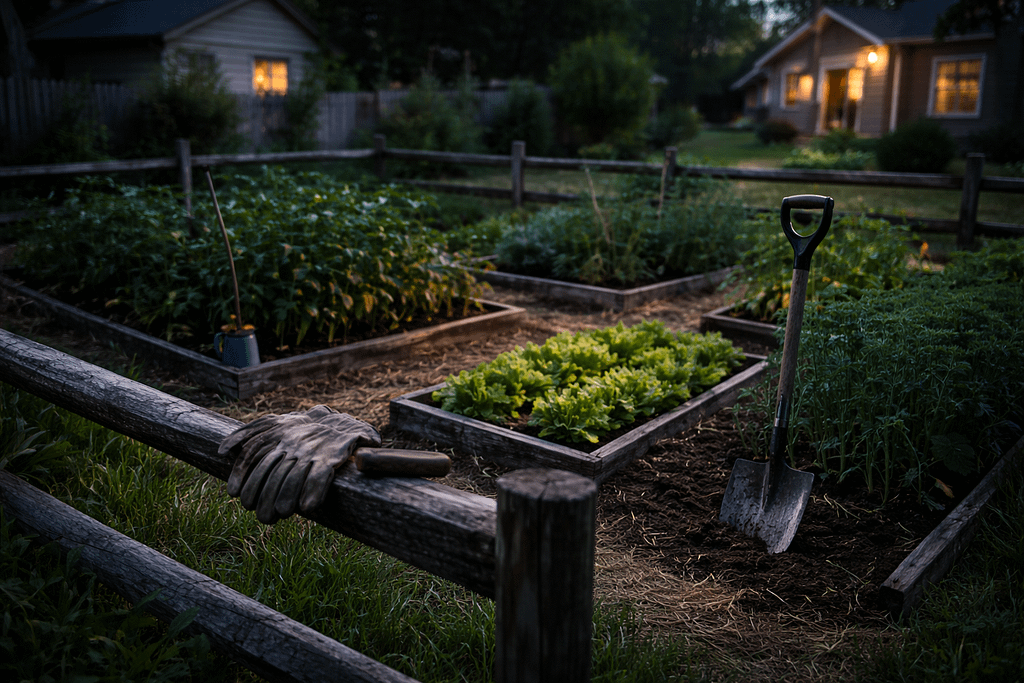
He can tend a garden without wondering who he betrayed to get there.

He can walk his town without looking over his shoulder.

He sleeps without rehearsing the cost of a gamble gone wrong.

The world rewards risk with applause. But it is steadiness that keeps roofs from collapsing.

Not every man climbs every stair. Some hold the ground firm enough for others to rise.

And we are better for the men who chose to stay.


The Conservatory grows quiet again.

If this letter found you at the right moment,
you are welcome to wander further in the Castle.


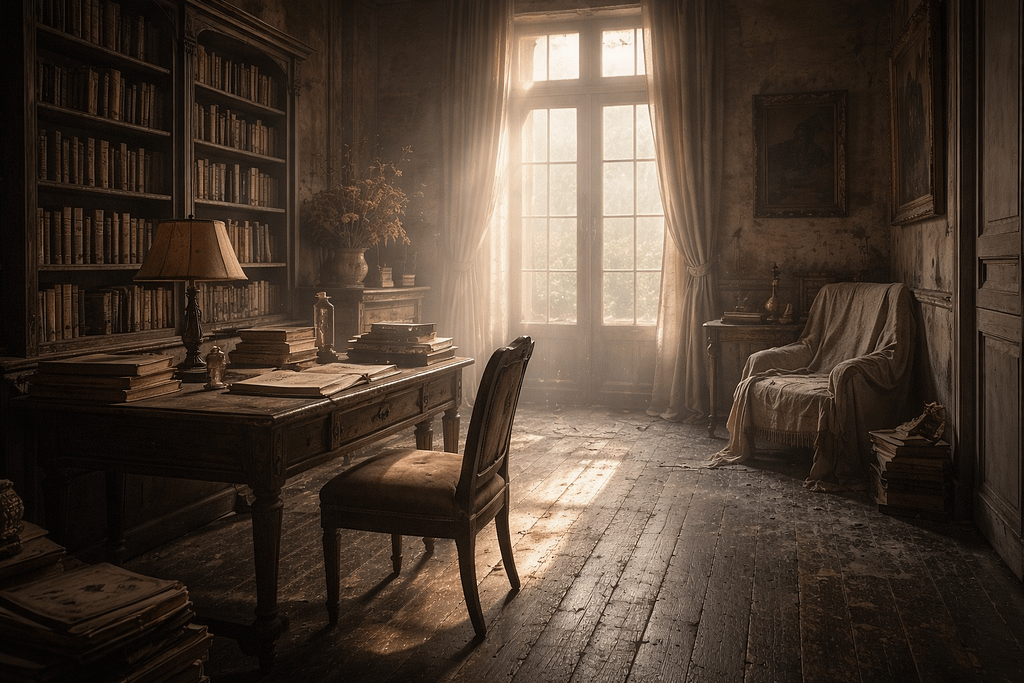
chair by the shelf


We build worlds now with taps and swipes. Stories float through clouds and disappear into screens.

But some magic still waits on paper.

There is something about a library — not just the books, but the presence of them.

Leather-bound spines and linen covers. Gold lettering that catches the light just so. The scent of parchment and ink that has outlived its writer.

These books don’t update or ping or scroll. They sit. They wait. And when you’re ready, they speak.

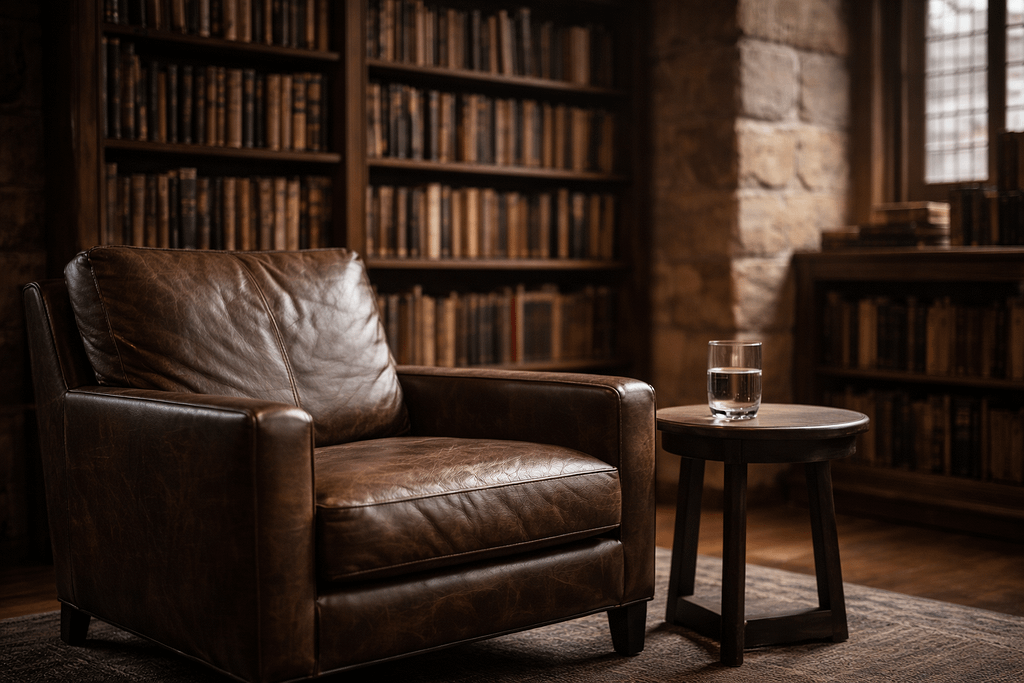
A well-placed chair — worn, angled slightly toward the shelf — says more than sit. It says linger. Stay long enough to remember who you were before the world told you to hurry.

Because tucked inside a library is more than history. It’s memory. It’s voice.

It’s the quiet record of what people believed was worth preserving — and an invitation to let it matter again.

The castles in my stories all have one. So does my home.

Maybe yours does too.


He stared at the cover for a long, unmoving moment. Then whispered to the quiet room, as if giving himself permission:

This one goes upstairs.


The Conservatory grows quiet again.

If this letter found you at the right moment,
you are welcome to wander further in the Castle.


still water


There comes a moment when you have to stop moving — not because the world demands it, but because you can’t keep outrunning what you’re carrying.

Real reflection doesn’t happen in the noise. It happens after. After the chase, after the mistake, after the push. It settles slowly, like evening over calm water.

If you never pause, you drift. You stay busy but never get clear. You move fast but never move well.

No one steps honestly into their future without first facing who they’ve been — the rushed decisions, the pride, the fear. Not to shame yourself, but to understand yourself.

The past doesn’t ask to be relived. It asks to be learned from. And when you finally understand it, you can set it down.

From there, your next step is chosen rather than automatic. Maybe you change direction. Maybe you slow your pace. Either way, stillness isn’t quitting — it’s adjustment. It’s the moment your movement becomes intentional again, and stronger for it.

When you move from that place, you move with purpose.


The Conservatory grows quiet again.

If this letter found you at the right moment,
you are welcome to wander further in the Castle.


narrow gate


Trust given without measure eventually invites what it cannot afford.

Not everyone who enters your life means harm — but harm rarely announces itself.

And as something you build gains value, attention follows.

Some will admire it. Others will study it. A few will look for leverage.

This isn’t bitterness. It’s pattern recognition.

Reputation isn’t protected by openness alone. It’s protected by discretion. The inner workings of a meaningful life were never meant for a crowd — they require silence, selectivity, and a certain distance that most people won’t understand but that time will justify.

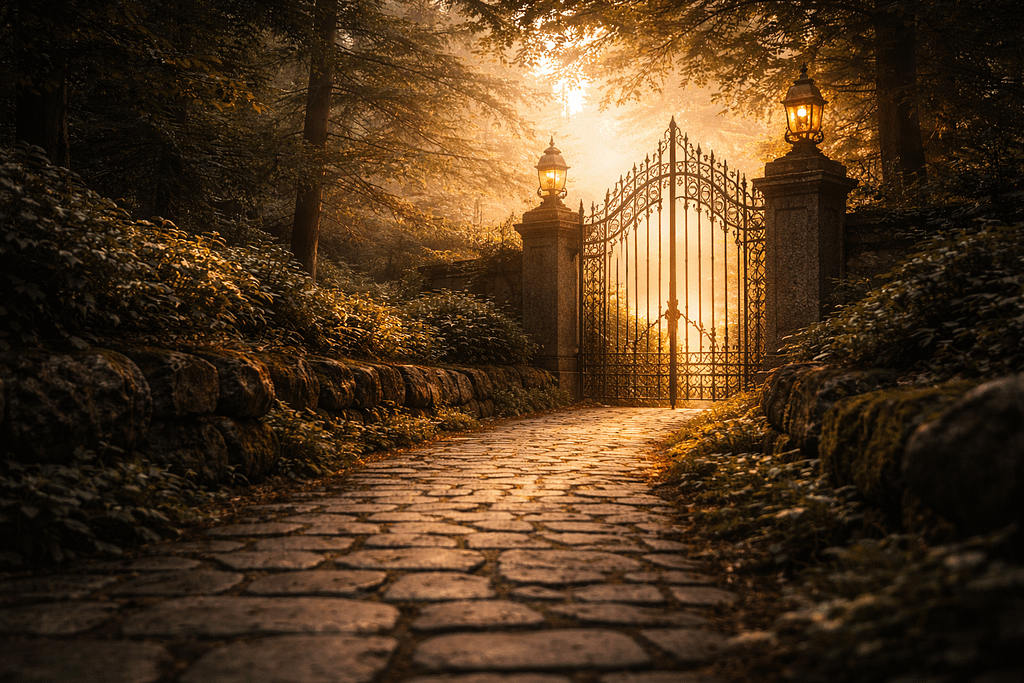
As your value grows, the path to you must narrow. Not to keep people out, but to ensure that those who enter arrive with intention.

Strong structures aren’t hidden. They’re controlled.

And the gate stays narrow not because you fear what might come through it, but because you understand what is already inside

— and you’ve decided it’s worth protecting.


your room


Somewhere beyond the noise, there is a room that remembers you.

It does not accuse you of leaving.

It does not resent the years you passed it by, convinced it no longer mattered.

It simply remained—unchanged in purpose, waiting for the moment you would finally be able to enter it honestly.

Everyone has a room like this.

A conversation never begun.

A truth set aside because the cost felt too high.

A way of living that once seemed impractical, idealistic, or impossible.

Time does not erase these rooms.

It only covers them in dust.

And then, one day, life slows.

The urgency fades.

The distractions thin.

That is when you feel it—not as longing, but as recognition.

A quiet pull.

A memory without nostalgia.

A sense that something unfinished has become possible again.

Not everything abandoned was a mistake.

Some things were simply ahead of their time.

Certain doors do not open for who we were.

They wait for who we have become.

So when you find yourself standing there again, do not rush past it out of habit.

Do not tell yourself it is too late.

Place your hand on the handle.

Feel the weight of it.

Step inside without apology.

Let what remains speak.

Let it ache if it must.

Let it remind you—not of regret—but of capacity.

The past is not always a chain.

Sometimes, it is a room you were never meant to enter

until you were strong enough to stay.


Some inherit their future only after they are willing to face what they once left unopened.


The Conservatory grows quiet again.

If this letter found you at the right moment,
you are welcome to wander further in the Castle.


quiet strength


Not every strength needs an audience.

The most enduring forms rarely announce themselves. They do not rush to be seen or heard. They do not argue their worth. They remain.

Quiet strength shows up without ceremony. It arrives on time. It stays when others leave. It does the work without asking to be credited for it.

It is the discipline to listen longer than you speak.
The restraint to hold your ground without needing to dominate it.
The steadiness to be relied upon, even when no one is watching.

In uncertain seasons—when plans unravel, voices rise, and urgency tempts reaction—it is not volume that holds things together. It is presence.

Quiet strength is the hand that steadies the table.
The calm that keeps decisions from fracturing.
The resolve that does not require explanation.

It does not demand trust.
It earns it—slowly, consistently, over time.

And when the louder forces exhaust themselves—when the shouting fades and the posturing collapses—it is quiet strength that remains standing.

Unmoved.
Unimpressed.
Still there.


The Conservatory grows quiet again.

If this letter found you at the right moment,
you are welcome to wander further in the Castle.


quietly decided


“You’re quiet,” the old man said as they stood beneath the stone archway.

“People usually get loud when they’re angry.”

“I’m not angry,” the younger man replied. “I’m decided.”

The old man studied him for a moment. “That’s more dangerous.”

“I don’t explode without reason,” the man said. “But when a line is crossed, I don’t argue with it.”

“And what comes instead?” the old man asked.

“Control,” he answered. “Focus.”

The old man nodded slowly. “Most men confuse restraint for weakness.”

“They confuse peace for safety,” the man replied. “I wasn’t built for that.”

Silence settled between them, heavy but unthreatening.

“I don’t seek confrontation,” the man continued. “But resistance has never stopped me.”

“And authority?” the old man asked.

The man met his gaze. “It doesn’t intimidate me. Truth guides me now.”

The old man smiled faintly. “And when the cost is pain?”

“Then I pay it,” the man said.

The old man smiled. After a pause, he stepped aside, clearing the path.

“You may go in,” he said. “The Castle doesn’t need noise. It needs men who know who they are.

The younger man passed through the threshold without another word.


The Conservatory grows quiet again.

If this letter found you at the right moment,
you are welcome to wander further in the Castle.


a quiet cost


The question isn’t whether you’ll do what it takes to become your best self.

It’s whether you’ll accept a life most people won’t understand.

Success rarely announces itself with applause.

More often, it arrives as distance.

Different hours. Different priorities.

Long stretches where no one quite knows what you’re building—or why you’re willing to sit alone with it.

There is a quiet loneliness that comes with choosing discipline over comfort.

With saying no when yes would have been easier.

With walking away from rooms you once wanted to belong to, because they no longer fit the person you’re becoming.

People will call it obsession.

Others will call it arrogance.

They will guise their disapproval by saying you’ve changed—as if your growth were a betrayal.

They won’t see the mornings you wake before the world.

The calculations you run in silence.

The restraint it takes to keep moving without recognition.

From a distance, success looks glamorous.

Up close, it looks like responsibility.

Like carrying more weight than you can explain.

Like standing somewhere high enough to see clearly—and far enough away to feel the cold.

This isn’t a warning.

It’s an accounting.

If you choose this path, you will gain clarity.

You will gain freedom.

You may even gain influence.

But you will also lose easy understanding.

Casual companionship.

The comfort of being like everyone else.

And still—if you’re honest—you would choose it again.

Because some lives are not meant to be crowded.

They are meant to be intentional.

Lit quietly, like a lantern at dawn, while the rest of the city still sleeps.


Some costs are personal. Others are systemic.

And a few only become visible once someone decides
that the existing order is no longer sufficient.


The Conservatory grows quiet again.

If this letter found you at the right moment,
you are welcome to wander further in the Castle.


strength through story


The world is changing. Fast.

And if we’re honest—our hearts and minds don’t always keep pace.

We feel the weight of headlines, the noise of constant comparison, the quiet ache of loneliness that few admit out loud.

But here’s the truth:

Strength doesn’t appear suddenly. It’s built.

Like a castle, stone by stone, through imagination, memory, and story.

That’s why Castle and Creek exists.

Not just as a collection of tales, but as a place—a refuge for those who believe that words can heal, inspire, and fortify.

Here, you’ll find stories that remind you you’re not alone, reflections that challenge and comfort, and inspiration to face whatever storms tomorrow brings.

Because resilience grows in the soil of imagination.

And when you nurture both—your roots deepen, your walls rise, your spirit steadies.


Step Inside

💡 If you’re ready to start building your foundation, you are welcome inside.

Choose Your Key


The Conservatory grows quiet again.

If this letter found you at the right moment,
you are welcome to wander further in the Castle.