hell is not seductive


Hell is not seductive.

What threatens us most is not destruction—but distraction.

Comfort masquerades as reward. Indulgence disguises itself as freedom. What feels good in the moment often costs quietly, over time.

Growth is rarely sabotaged by force. It is diluted by excess.

The disciplined learn to recognize this early. They train their attention. They guard their energy. They choose restraint not out of fear, but out of clarity.

Victory is not loud.
It is consistent.


Some costs are personal. Others are systemic.

And a few only become visible once someone decides
that the existing order is no longer sufficient.


The Conservatory grows quiet again.

If this letter found you at the right moment,
you are welcome to wander further in the Castle.

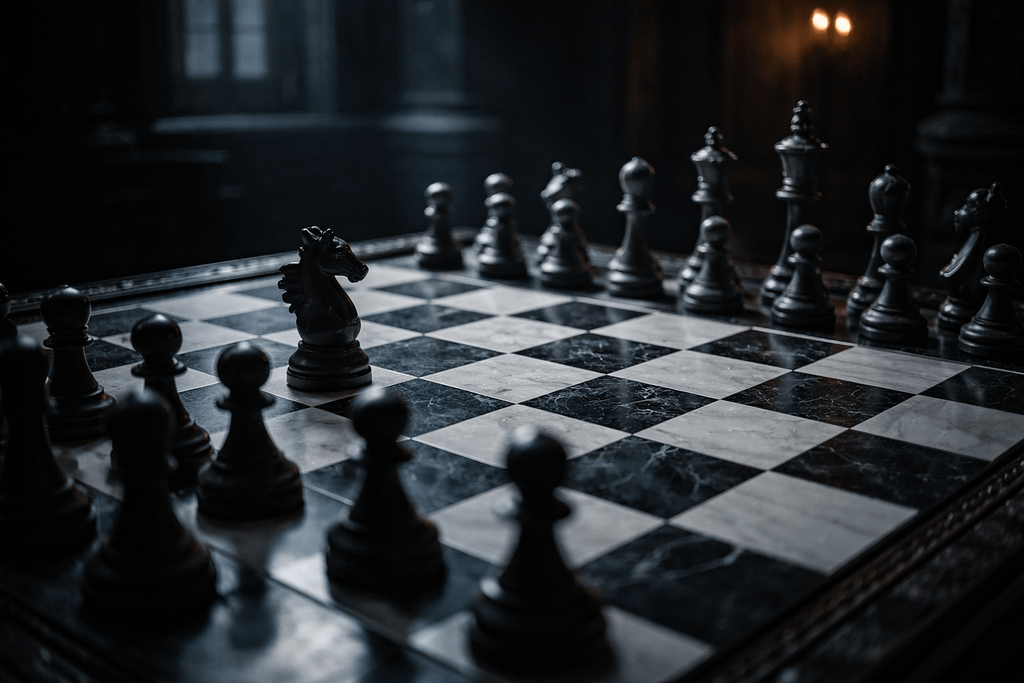
watch every move


There is no nobility in haste—

especially in moments that shape relationships, reputations, and futures.

Speed belongs to the body.

To the field.

To the ring.

In matters of thought and feeling, speed only narrows the path.

Those who pause see more.

Each breath opens options.

Each moment of restraint invites clarity that haste can never reach.

When someone reveals themselves—

through words, tone, or careless emotion—

there is no need to answer immediately.

Watch.

Listen.

Let the silence do its work.

People often mistake quiet for absence.

They believe the pace they set is the pace that governs.

It rarely is.

Those who endure learn this early:

outcomes are shaped not by reaction,

but by patience held long enough to understand the terrain.

Strategy does not live in cleverness.

It lives in the pause.


Some never pause. They prefer to see the consequences later.


The Conservatory grows quiet again.

If this letter found you at the right moment,
you are welcome to wander further in the Castle.

ghost of potential


You do not have to enter a room to feel its power.

Standing at its threshold is often enough.

The stone is cold beneath your feet.
A brisk wind moves along the outer walls.
Even the candles inside waver, as if aware they are being watched.

Something within is waiting.

Not with menace—but with memory.

And so you hesitate.

It’s not fear, exactly, but because you recognize what stepping inside would require.

We spend far more time than we admit thinking about the rooms we almost entered.

The words we nearly spoke.
The choices we paused too long to make.
The lives we brushed against, then stepped away from.

Some call this nostalgia. Others name it regret.

But it is neither.

It is the ghost of potential—and it appears only when something remains unfinished.

If the door were truly closed, you would feel nothing at all.

The pull is the proof.

So take the lantern.

It will not flood the room with certainty.
To add just enough light to move forward.

One step is sufficient.

Memory, like candlelight, flickers.
Unsteady—but not extinguished.

What waits beyond the threshold may feel unfamiliar.
It may require a darker counsel than comfort ever provided.

But that tension you feel is not a warning.

It is the Castle calling you onward.

And sometimes, lifting the lantern
is the only permission you were ever meant to need.


The Conservatory grows quiet again.

If this letter found you at the right moment,
you are welcome to wander further in the Castle.


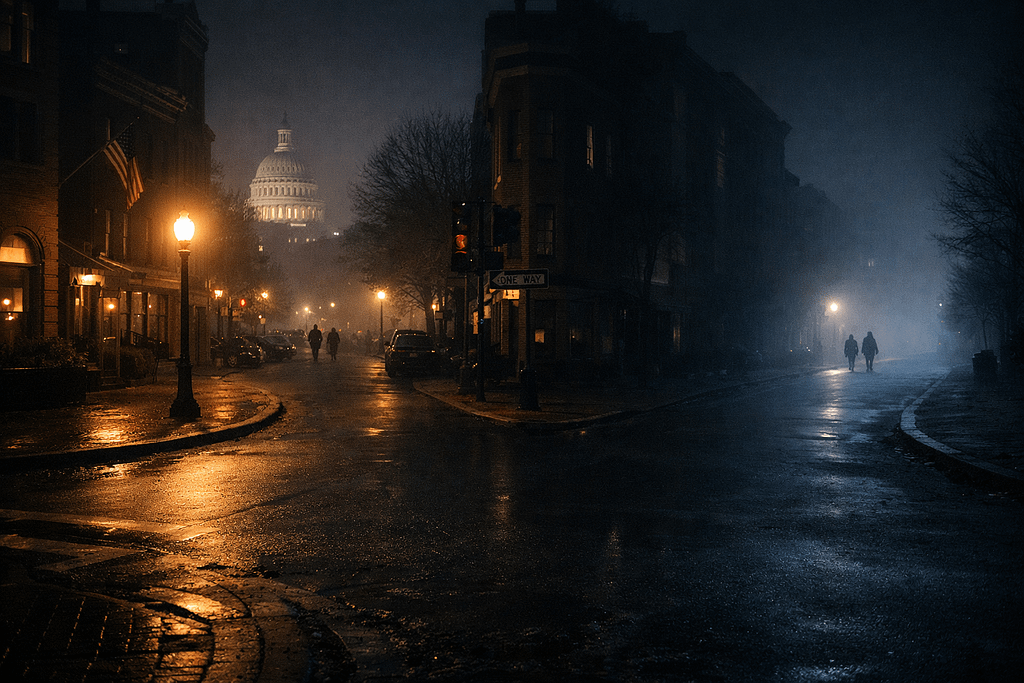
through the fog


Very few journeys begin with the end in sight.

Most begin with uncertainty—
with partial information, imperfect data, and a path that disappears just a few steps ahead.

And still, we go.

You do not need to see the whole road to begin walking it.
You only need enough light for the step in front of you.

Clarity is rarely granted in advance.
It is earned—slowly—through motion.

One step.
One breath.
One decision made without guarantees.

Those who wait for perfect certainty often remain where they are,
mistaking caution for wisdom.

Those who move accept a quieter truth:
the fog does not lift all at once.

It recedes only as you pass through it.

And sometimes, the act of stepping forward
is not reckless—

it is how others learn the way.


Before the decision. Before the certainty. He walked the path anyway.


The Conservatory grows quiet again.

If this letter found you at the right moment,
you are welcome to wander further in the Castle.


dig a path


Rivers do not argue with the land.

They return to it—again and again—until the earth yields.

Over decades, their persistence becomes strength.
Their patience becomes direction.

But not every current carries you where you are meant to go.

Sometimes the water you’re following was shaped by an earlier season—
by circumstances that no longer serve the life you’re building now.

When that current pulls you backward, you do not curse it.
You redirect it.

You dig where the ground is softer.
You move the stones that block the flow.
You accept that momentum may slow while a new channel forms.

This is not resistance.
It is authorship.

Land changes when met with intention.
So do lives.

You are not stalled.
You are shaping something that has not existed before.

And every river that lasts
began as a decision to go another way.


The Conservatory grows quiet again.

If this letter found you at the right moment,
you are welcome to wander further in the Castle.


strength isn’t loud


Strength doesn’t need volume.

It doesn’t rush to prove itself. It doesn’t chase attention.

It solves what it can. It endures what it must.

And most of the time, it speaks last.

There are three kinds of strength. Each supports the others.

Build one, and life improves.
Build all three, and life steadies.

Physical strength is discipline.
It shows you care for the body that carries you.
Not to intimidate — but to stand grounded.
A steady presence settles a room without effort.

Emotional strength is restraint.
It keeps you from reacting to every spark.
It allows you to listen when others escalate.
To stay measured when pressure rises.
To rebuild without bitterness when things fall apart.

This is the strength most men overlook — and the one most tested.

Intellectual strength is clarity.
It is the patience to think before speaking.
The humility to keep learning.
The discipline to choose long-term growth over short-term pride.

Together, these form something rare.

Not armor that isolates.

But stability that protects.

You do not need to be the loudest person in the room.

You need to be the most controlled.

Because real strength is not noise. It is command — of yourself.

And that is where peace begins.


The Conservatory grows quiet again.

If this letter found you at the right moment,
you are welcome to wander further in the Castle.


teacher and test


Pain and failure are not rivals.
They travel together.

The man who tries to outrun pain learns this eventually—because pain is patient. It waits until avoidance becomes habit, and habit becomes consequence.

When you fear pain above all else, you hesitate.
You retreat from edges that demand growth.
You decline risks that might change you.

You build careful defenses meant to preserve comfort—only to discover that life has its own ways of breaching them.

Pain is the teacher that does not soften its voice.
It speaks plainly, through sensation and cost.
You feel it. You cannot misinterpret it.

Failure is the test that follows.
Not to punish—but to reveal.

What did you learn?
What did you refuse to change?

Avoid one, and the other sharpens.
Avoid both, and something more dangerous sets in: stagnation.

But when pain is met without fear, its role shifts.

It informs the next step instead of ending the path.
A warning instead of a verdict.
A pressure that shapes rather than shatters.

In that shaping, failure loses its authority to define you.

It becomes evidence—not of weakness, but of contact.

Proof that you entered the work instead of watching from a safe distance.

This is where some learn too late:
what we refuse to face does not disappear.

It lingers. It accumulates. It leaves a residue.

Strength is not the absence of pain.

It is the refusal to let fear decide what you are willing to become.


to consistency


Motivation arrives when it wants to.

Discipline answers when it must.

But consistency is what stays.

It doesn’t surge.

It doesn’t inspire.

It returns.

Day after day, it places one stone where another already rests.

It doesn’t chase the summit—it builds the path that reaches it.

Consistency doesn’t just fulfill goals.

It reshapes them.

What you return to quietly becomes what carries you forward.


The Conservatory grows quiet again.

If this letter found you at the right moment,
you are welcome to wander further in the Castle.


your room


Somewhere beyond the noise, there is a room that remembers you.

It does not accuse you of leaving.

It does not resent the years you passed it by, convinced it no longer mattered.

It simply remained—unchanged in purpose, waiting for the moment you would finally be able to enter it honestly.

Everyone has a room like this.

A conversation never begun.

A truth set aside because the cost felt too high.

A way of living that once seemed impractical, idealistic, or impossible.

Time does not erase these rooms.

It only covers them in dust.

And then, one day, life slows.

The urgency fades.

The distractions thin.

That is when you feel it—not as longing, but as recognition.

A quiet pull.

A memory without nostalgia.

A sense that something unfinished has become possible again.

Not everything abandoned was a mistake.

Some things were simply ahead of their time.

Certain doors do not open for who we were.

They wait for who we have become.

So when you find yourself standing there again, do not rush past it out of habit.

Do not tell yourself it is too late.

Place your hand on the handle.

Feel the weight of it.

Step inside without apology.

Let what remains speak.

Let it ache if it must.

Let it remind you—not of regret—but of capacity.

The past is not always a chain.

Sometimes, it is a room you were never meant to enter

until you were strong enough to stay.


Some inherit their future only after they are willing to face what they once left unopened.


The Conservatory grows quiet again.

If this letter found you at the right moment,
you are welcome to wander further in the Castle.


legacy left behind


Your legacy is not what you say it is.
It’s what remains when you are no longer there to explain yourself.

It lives in the people you touched—
not in what you gave them,
but in what you took,
what you ignored,
what you left unresolved.

They will remember how you made them feel
long after they forget what you meant to do.

Some inherit warmth.
Others inherit silence.
Some inherit wisdom.
Others inherit wounds that don’t carry your name—but carry your shape.

You do not pass down intentions.
You pass down patterns.

Uncorrected relationships do not fade.
They harden.
They become stories told without you in the room.

Health neglected does not forgive.
It burdens those who must carry what you refused to tend.

Wisdom withheld does not disappear.
It is replaced—often by something poorer, louder, and more dangerous.

Hollow Hill remembers this.

It was built by people who believed their choices ended with them.
They did not.

Every structure leaves an imprint.
Every life does the same.

You will pass something down.
The only question is whether it will shelter those who come next—
or stand over them like a warning.


The Conservatory grows quiet again.

If this letter found you at the right moment,
you are welcome to wander further in the Castle.