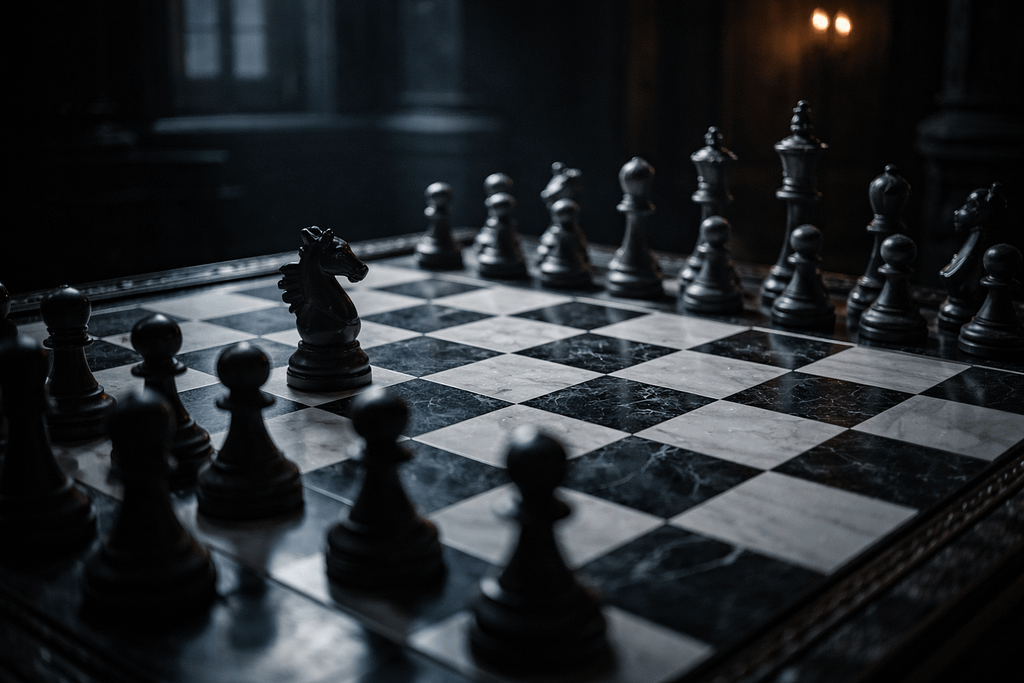
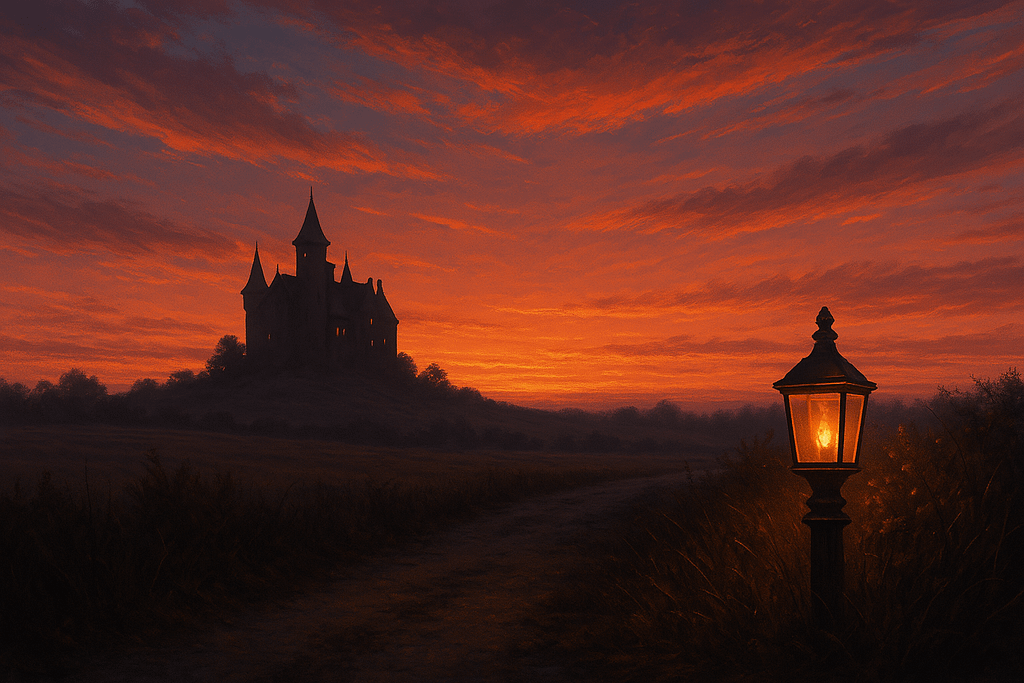
watch every move


There is no nobility in haste—

especially in moments that shape relationships, reputations, and futures.

Speed belongs to the body.

To the field.

To the ring.

In matters of thought and feeling, speed only narrows the path.

Those who pause see more.

Each breath opens options.

Each moment of restraint invites clarity that haste can never reach.

When someone reveals themselves—

through words, tone, or careless emotion—

there is no need to answer immediately.

Watch.

Listen.

Let the silence do its work.

People often mistake quiet for absence.

They believe the pace they set is the pace that governs.

It rarely is.

Those who endure learn this early:

outcomes are shaped not by reaction,

but by patience held long enough to understand the terrain.

Strategy does not live in cleverness.

It lives in the pause.


Some never pause. They prefer to see the consequences later.


The Conservatory grows quiet again.

If this letter found you at the right moment,
you are welcome to wander further in the Castle.


ghost of potential


You do not have to enter a room to feel its power.

Standing at its threshold is often enough.

The stone is cold beneath your feet.
A brisk wind moves along the outer walls.
Even the candles inside waver, as if aware they are being watched.

Something within is waiting.

Not with menace—but with memory.

And so you hesitate.

It’s not fear, exactly, but because you recognize what stepping inside would require.

We spend far more time than we admit thinking about the rooms we almost entered.

The words we nearly spoke.
The choices we paused too long to make.
The lives we brushed against, then stepped away from.

Some call this nostalgia. Others name it regret.

But it is neither.

It is the ghost of potential—and it appears only when something remains unfinished.

If the door were truly closed, you would feel nothing at all.

The pull is the proof.

So take the lantern.

It will not flood the room with certainty.
To add just enough light to move forward.

One step is sufficient.

Memory, like candlelight, flickers.
Unsteady—but not extinguished.

What waits beyond the threshold may feel unfamiliar.
It may require a darker counsel than comfort ever provided.

But that tension you feel is not a warning.

It is the Castle calling you onward.

And sometimes, lifting the lantern
is the only permission you were ever meant to need.


The Conservatory grows quiet again.

If this letter found you at the right moment,
you are welcome to wander further in the Castle.


when shadows gather


We learned from the simple choices we’ve made.

Whether in haste, or anger, or lust. We understand how they created our problems.

It’s never those simple choices that undo us. That create irreversible harm.

It’s the tangled ones—when envy stirs below the surface, when the wrong voice whispers consistently, when the storm presses suddenly at the door.

In those moments, when shadows gather, our vision blurs.

We crave relief, approval, or a shortcut —seeking an immediate and unrealistic return to steadiness.

And that’s when we are most at risk.

Because when dressed in urgency, truth is veiled in weakness.

Precisely when strength matters most.

Not the strength of pride or power—but of clarity.

The ability to pause, to sift through voices, to know which burdens are real and which are planted in us by others.

Because one compromise rarely ends in one step.

It breeds another. And another.

Until the path we never meant to take becomes the only road we can see.

When shadows gather—be at your strongest.

Bring intentional clarity when it counts most.


The Conservatory grows quiet again.

If this letter found you at the right moment,
you are welcome to wander further in the Castle.


the power of the pause


The world moves fast and calls it strength.

It demands replies, reactions, decisions—now.

As if stillness were weakness. As if restraint were fear.

It isn’t.

Real strength is a man who does not move when everything inside him demands that he do so.

When anger surges.

When pride looks for an opening.

When fear disguises itself as urgency.

And he pauses.

Not because he is unsure.

But because he understands what is at stake.

The pause is not hesitation.

It is ownership.

It is the breath between impulse and consequence.

The moment where judgment outpaces instinct.

Where regret is denied the chance to exist.

A single word can fracture trust.

A single reaction can redirect a life.

A single unexamined moment can carry weight for years.

Men who pause are not slow.

They are precise.

They move when movement matters.

They speak when words will not need to be taken back.

They act knowing the outcome will belong to them alone.

The pause is where control lives.

Where power remains internal.

Where strength proves it does not need to announce itself.

So pause.

Not because you lack confidence—

but because you understand exactly how much damage the wrong moment can do.

And because when you finally move,

there will be no doubt it was deliberate.


In chambers where decisions carry consequence, the pause is not hesitation—it is control.


The Conservatory grows quiet again.

If this letter found you at the right moment,
you are welcome to wander further in the Castle.


CH01: the Unending


Philadelphia would forget him by morning. That was the way he liked it.

A tall figure moved through the city like smoke—seen, but never truly perceived. His cloak absorbed light. His steps dissolved sound.

To the city’s weary eyes, he was just another late commuter, another face hunched against the cold.

But he did not walk with direction.

He moved to gather what others discarded—shame, fear, rupture.

He was harvesting.

For Them


Teso paused beneath a flickering streetlamp, one hand resting lightly on the steel and silver watch he carried—not to check the time, but to listen to it.

A low thrum pulsed beneath its ticking.

He heard the unwinding of a young couple’s argument at a bus stop, a lie spoken over drinks on Broad Street, the flutter of shame from a child caught stealing gum in a corner store.

The city bled these moments continually. Teso collected them selectively—small ruptures that might one day justify an ask.

Not for himself. For them.

As a delivery truck rumbled past, its red taillights glowing like embers in the fog, he slipped into an alley where no camera faced and no pedestrian followed.

The wall ahead shimmered faintly. With one turn of the watch’s crown, the bricks wavered—and then were gone.

Beneath the Stones


He descended carefully.

The staircase was old, predating any known structure above. Stone worn smooth by centuries of passage, though few now remembered the way.

At the bottom, iron doors yawned inward to the breathless dark of the cathedral’s lowest chamber.

Teso stepped into it comfortably.

There was no ceremony.

Only the presence of brooding and darkness.

The Counsel


Anto stood near the board.

His fingers hovered over two pieces—bishop and knight—as if considering a rewrite already in motion.

The chessboard glowed faintly with candlelight not seen, just felt. Every piece carved from bone or horn or something older still.

A game never finished, but continually measured.

Viro, as always, remained by the mirror.

Its surface flickered with faint movement, the whisper of things to come pressing against the glass. He said nothing. He didn’t need to. His hand rested on the frame, one clawed finger trailing frost along the border.

Teso stepped onto the stone floor without greeting.

“You were right,” he said. “The branch fell early. The roof split. They’ll file a claim by noon.”

Anto shifted a single pawn.

“The spiral begins.”

“They are already clawing for stability.”

The mirror shimmered—showing a flicker of a woman in a hallway, arms folded, lips tight. A child’s toy clattered to the floor behind her.

Teso moved closer.

“I can offer the next name.”

“No need,” Anto said, adjusting a rook. “He’s already circling.”

“A father,” Teso added. “Good. Desperate. He won’t come for power.”

Anto turned a bishop slowly, letting it echo through the chamber.

As the bishop moved, the mirror caught its breath.

Viro finally spoke, voice brittle as glass:

“Then he’ll come for peace. A far more dangerous ask.”

Unending


The mirror brightened.

A face formed—unaware, asleep, but burdened. His brow creased, even in rest. A woman beside him, turned away. A child’s breath caught mid-dream.

Teso stepped beside Viro, gaze quiet.

“He doesn’t know he’s chosen.”

“He will,” Anto said, moving the queen one square.

“She still believes she can protect him,” Viro added.

“And she might,” Teso murmured, “had she not made an ask of her own.”

The mirror darkened.

No one moved.

The cathedral breathed in silence.

And far above, a man shifted in his sleep, as if touched by an impending dream.

His life hadn’t changed yet—

but to the Counsel, his was already theirs.


A Garden Grave


Chamber Tale V


The village had grown around his gardens.

Figs, olives, and grapes spread across the hills in disciplined abundance, their terraces carved with a precision no one living could remember beginning. Seasons came and went, and the land answered faithfully.

Harvests swelled. Trade followed. Men spoke of the gardener as they spoke of providence—rarely seen, never heard, but always present in the fruit.

They called him a savior.

The Fair Artist


She had grown up tracing those hills with her eyes.

Her parents taught her the arts, believing beauty was something that could be studied, refined, preserved.

As a girl, she would sit along the stone walls at the edge of the vineyards, charcoal smudging her fingers as she sketched the curves of vine and terrace.

She often left her drawings behind when she finished—tucked between stones, weighted with quiet notes.

This is beautiful.

The gardener found them.

The Growing Silence


He did not need to ask who had made them. No hand but a human one could see his work as something still becoming. He waited one morning and watched her draw a fig tree, her attention absorbed entirely by what stood before her.

When she finished, she did not look up. She only stood, and they lay together without a word—vision meeting interpreter, present recognized and accepted.

A year passed.

She returned with a child at her breast. The garden had grown in her absence, just as she had. She sketched again, this time expanding what already existed—lengthening a terrace, adjusting a path so it might catch the sun longer as it fell. Beneath her drawing, she wrote:

If you add this, it could look like this.

He approached her again. They did not speak. They lay together beneath the same unbroken silence.

The Orchard


She came back older, carrying the weight of two sons. The pull of his gardens drew her still—convincing her that what had been planted together could yet take root.

She brought no sketchbook.

When he found her standing among the rows, she looked out over the orchard and frowned—not in malice, but in fatigue.

“I wouldn’t have done it this way at all,” she said.

He turned—not from her, but from the moment.

In that turning, he saw what would follow. The orchard emptied. Terraces abandoned. Trade drifting south toward fields still guided by careful hands. The village thinning, season by season, learning too late what absence would cost.

Then he looked back at her.

Her expression did not change. She was waiting—not for forgiveness, but for permission.

They lay together one final time. Neither closed their eyes. What would follow was already known.

The Garden Grave


A year later, she returned as she had before.

The orchard she had once criticized had grown denser still, heavy with fruit. A new terrace rolled along the southern hills, unfolding gently before ending at the threshold of a stone cottage. Its walls were stacked generously high, but the dwelling itself was narrow—too narrow to hold many.

She set her sons on a bench facing the cottage and opened her sketchbook.

The windows were large and unshuttered, exposing the interior to the afternoon light. That was when she saw the cribs.

Three of them. No more.

The charcoal scratched the parchment with a deliberate first stroke—and stopped.

She looked again. The smallest crib bore a name etched into its cherry headboard: Anto. The other two were unmarked. There were no other furnishings. No space left unclaimed.

A wind swept through the orchard. Sweet and floral, the scent gathered around her as she slowly closed the sketchbook.

She looked down at her sons. The youngest’s hair had darkened—black as turned soil, deeper than it had been moments before.

He appeared beside the bench without warning. His eyes moved over the orchard—its breadth, its bounty—before he lifted the child from the bench.

The charcoal fell and broke against the path. She sank against the cold stone, breath shallow and unsteady.

He carried Anto to the cottage and laid him gently into the smallest crib as the sun slipped behind the orchard trees. The other two followed, choosing their places without instruction.

Only then did he speak.

“Look after your brother tonight,” he said. “He will forever depend on you.”

He did not look back. The door closed behind him, and he walked toward the vineyard as the light thinned among the rows, heavy with fruit.


This chamber closes quietly.
Some rooms are entered once.

The Mirror


✥ Chamber Tale III


They say she was born too beautiful to live humbly.

Isabetta della Torre grew up in a crumbling villa near Verona, a place where walls wept salt and vines split through stone. Her father, a once-grand merchant of silk and wine, lost most of his fortune to war and poor wagers—but not before acquiring a gift for his only daughter: a mirror unlike any in the region.

Tall as a man and framed in blackened walnut and brass, the mirror’s surface shimmered not silver, but deep and smoky—like polished obsidian or wet ink. Imported from Venice, it was rumored to be cut from glass cooled in the fires beneath San Servolo, and whispered about in half-lies and old tongues.

The villagers called it Il Vetro Oscuro. The dark glass.

Isabetta kept the mirror prominent in her home.

The Visitor


Isabetta was sixteen when the man called Aelius first arrived.

He came not with music or retinue, but with stillness. Hair dark as lamp oil, skin pale and unlined, his voice slow and soft and difficult to argue with.

“I came to see the one who does not age.”

She laughed at him then. But she let him in.

He visited at dusk, never by sun. Always cloaked, always gloved, always standing beside her but never across from her in the mirror. She offered him a chair. He declined. She offered him wine. He declined. She offered him her hand. He simply looked at her and said:

“Your beauty is not what makes you rare. It is your discipline. You do not waste it.”

She had never been praised for restraint. It thrilled her.

The Bond


Change was palable. Isabetta was different.

Her servants began to leave soon after the new visits. Some claimed they heard her speaking to the mirror. Others claimed the glass sometimes pulsed, like something breathing behind it. All believed there was now a curse.

Isabetta stopped eating grapes—too staining. Stopped walking outdoors—too coarse. She sat before the mirror for hours, powdered her skin with mercury, and lined her eyes with ash.

Aelius returned every evening. He brought no gifts. No promises. Only presence.

He never stepped into the mirror’s view.

When she asked why, he said,

“The mirror does not know me.”

The Unveiling


One night, her voice trembled when she spoke:

“I want to see myself as you see me.”

Aelius turned to the mirror. For the first time.

“Then let it reflect truth.”

The glass darkened. The candlelight bent and slowed. Isabetta turned her face to the mirror—

—and recoiled.

Her beauty was gone. Her skin was pale as bone, hollowed beneath the eyes, lips bruised and cracked. Something shimmered at her throat—a black rot, like mold beneath glass.

And Aelius? His face had changed too.

In the mirror, he was not a man. Not entirely. His smile split at unnatural angles. Eyes were hollow sockets. His shoulders bent like old wood warped by rain.

She screamed.

Outside the glass, he remained beautiful.

The Curse


Isabetta tried to shatter the mirror. Threw perfume bottles. Candelabras. Her father’s cane.

It would not crack.

The next week, a suitor arrived. He gazed into the mirror before seeing her. He left in a sweat. Another came. He collapsed in the garden, crying blood and asking for his mother. A third jumped from the east tower, shouting that he’d seen his future and could not bear it.

Isabetta sealed the villa.

Some say she took lye and vinegar to erase her features. Others say she starved herself before the glass, waiting to fade.

But none could explain why, decades later, the villa was found empty—untouched by time. Dustless. Cold. But the mirror still standing.

Legacy


With time the mirror changed hands. A relic. A mystery.

Some collectors swore it enhanced their confidence. Others locked it away. One claimed it whispered names.

But centuries later, in a new century full of glass and chrome, a boy would find it again.

He would be drawn to its stillness. To its hunger. To its memory.

And unlike Isabetta, he would not fear the face inside.

One day, the boy etched into the frame:

The mirror had learned to seduce before it learned to reflect.


This chamber closes quietly.
Some rooms are entered once.

The Piper’s Debt


✥ Chamber Tale II


They said the flute was cursed.

But Leofric didn’t believe in curses—only in tools. And this one was perfect.

It had been hidden in the reliquary of a ruined monastery, among cracked chalices and rotted robes, wrapped in waxed linen and bound with a red ribbon. The merchant who sold it to him muttered something about blood and contracts and “the one who vanished with the children.” But Leofric only smiled.

“Let them vanish again.”

He said.

“I only need one to come.”

He paid in coin and took it home.

The Sound Called


Leofric had once been known in the courts—a minor noble with a brilliant voice and too much charm. But charm fades when favor does, and favor had already abandoned him.

His estate was small. His servants gone. His name, a whisper in the mouths of lesser men.

But the flute—the flute sang.

The first time he played it, the melody slid through the halls like warm honey. No warble, no tremble. Pure, sweet, almost living. As though the flute exhaled through him.

He played it every evening from his high window, the balcony lit by two iron lanterns. He imagined the villagers below pausing at their hearths, tilting their heads, wondering, yearning.

He pictured riders dismounting, maidens closing their books, fathers dropping their cups.

But no one came.

Not yet.

The Waiting


By the third night, Leofric had trimmed his beard. He had lit candles in the hall and laid out wine on the long-unused table. He rehearsed his welcome speech—a touch of mystery, not desperation. The right balance of awe and charm.

Still, no one came.

But he heard… things.

Footsteps on the gravel path. Once, a breath on the other side of the door. He flung it open, smiling—only to find mist curling across the grass, and silence.

The dreams began then.

People standing in his hall. Still. Silent. Staring. Their mouths hung open, but their faces were blank—no features, only skin stretched smooth like wax left near a fire.

He woke with the flute clutched in his hand.

A Warning


On the sixth day, a wandering monk arrived—drenched in rain, his robe in tatters, a string of wooden beads trailing behind him like a severed tether.

He did not beg. Just listened.

And when Leofric played, the monk’s eyes widened—not with awe, but with recognition.

“That flute is not meant for music.” 

The monk’s voice raw with cold.

“It played once for a debt. A pact made in blood. It was never yours to use.”

Leofric scoffed and offered him coin.

The monk refused.

“The Piper made a vow. One that cannot be broken. When the tune returns, so does the collector.”

The coin slipped from Leofric’s hand and vanished between the stones.

The monk left without another word. He did not look back.

The Collector


That night, Leofric lit every candle in the manor. He polished the wine glasses. He wore his best coat, black with silver trim.

He played a new melody—rising, aching, filled with longing and warmth. It swelled through the rafters, out into the trees.

When the knock came, it was gentle.

Three slow knocks. Then silence.

He smoothed his hair, straightened his sleeves, and opened the door.

A figure stood beneath the arch.

Tall. Cloaked in worn velvet, the color of dried blood. No hood. No mask.

No face.

Its head was featureless—smooth, pale, and wrong. A canvas unfinished. It stepped inside.

The air thickened.

Leofric backed away. His mouth opened, but no sound emerged. The figure extended a long, blackened hand. In its palm, a scrap of parchment began to ink itself from within:

This instrument was bound to a contract made by Jörg Tiedemann, servant to Teso, Keeper of Time. You are not its master.

The other hand lifted, waiting.

Leofric, trembling, held out the flute.

The moment it touched the demon’s palm, the music in the walls stopped.

The Silence


Leofric tried to speak. Tried to scream.

His mouth opened, wide—wider than it should have. But the sound was gone. The very idea of voice pulled from him like silk through a needle’s eye.

The figure turned. The candles snuffed behind it, one by one.

And Leofric’s manor began to collapse—not in ruin, but in absence.

Stone, glass, and flesh folding into stillness until not even the soil beneath remembered a house had stood there.

Legacy


In the woods nearby, a child awoke to music on the wind. Soft. Sweet.

They turned toward the mountains.

But saw only trees.


The flute had never played for others. It had only played to call its master home.


This chamber closes quietly.
Some rooms are entered once.